
COLLECTION
Videotape Eyes
Identity captured, distorted, and rendered obsolete by technology and time.
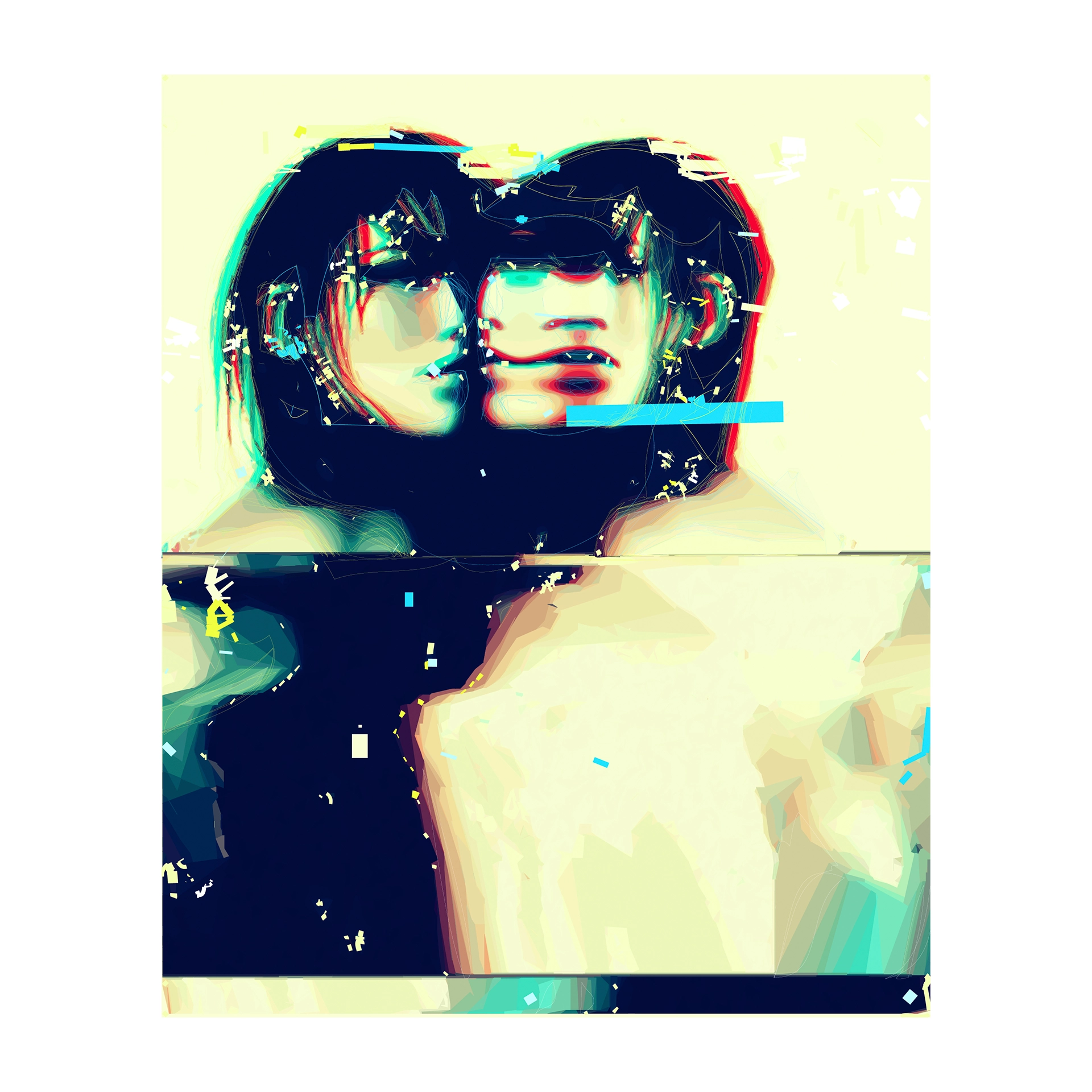

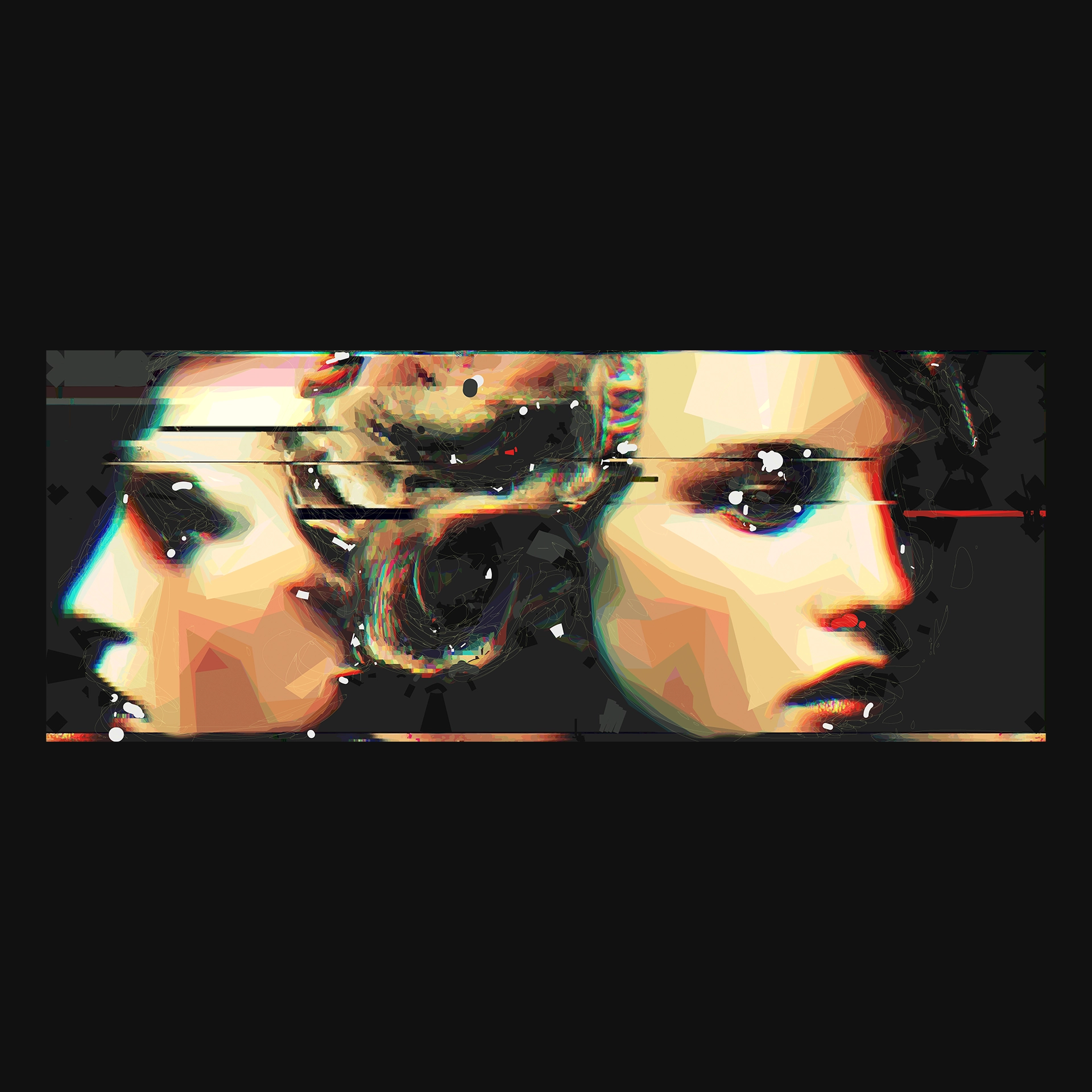
The videotape eyes collection represents a shift in Macaco+’s discourse, moving from social critique of the image to a profound exploration of identity captured and lost in time. Composed of three intimate, frontal portraits of models, this series employs the aesthetic of error to evoke a nostalgia for identity as a fixed entity, something that today seems to have fallen into obsolescence against the tide of digital fluidity.
Here, the facial features are present but not intact. Macaco+ uses the proximity of the portrait to amplify the individual’s fragility when faced with the inexorable passage of time and technological collapse. The Glitch merges with the simulation of old VHS tapes, creating an aesthetic that smells of dust, damaged magnetism, and an identity frozen in an outdated format.
The distinctive element of videotape eyes is the incorporation of RGB desynchronization (red, green, blue), a technique that simulates the deterioration and failed tracking of an analog video. This visual desynchronization not only adds a layer of aesthetic nostalgia but also serves a conceptual function:
The Phantom Body: The separation of the color channels creates a double or triple image that slightly superimposes itself. This suggests that the model’s identity is being replicated or duplicated by the technology itself. The individual is not one, but a series of desynchronized echoes, as if their “self” is being transmitted through multiple channels, none of which manage to perfectly align.
The Vulnerability of Memory: By applying this Glitch technique over the face—the epicenter of identity—Macaco+ exposes how our memories and the perception of our “self” are subject to the deterioration and inaccuracy of the mental “tape” that stores them.
The VHS aesthetic is key. It is a powerful nostalgic element that evokes an era of low-fidelity technology and a conception of the image less filtered and controlled than today’s. By applying this obsolescence to the intimacy of the portrait, the artist forces us to question: What happens to our identity when the format in which it was recorded becomes obsolete?
The extreme distortion in some pieces completely disassembles the features, but instead of concealing, it reveals vulnerability. The Glitch in the eyes—the videotape eyes—is not blindness, but the representation of a gaze that has been recorded and rerecorded to the point of saturation and failure, a visual testament to what has been lost in the constant migration from analog to digital.
videotape eyes is a meditation on the self in time and technology. Macaco+ presents us with portraits that are actively decomposing, not from age, but from the failure of the recording system.
The collection is an emotive and aesthetically potent reminder that identity, much like an old VHS tape, is a fragile medium susceptible to noise. In the beauty of its nostalgic Glitch, Macaco+ celebrates the authenticity of imperfect memory and the melancholy for a self that has already desynchronized.
Collections